
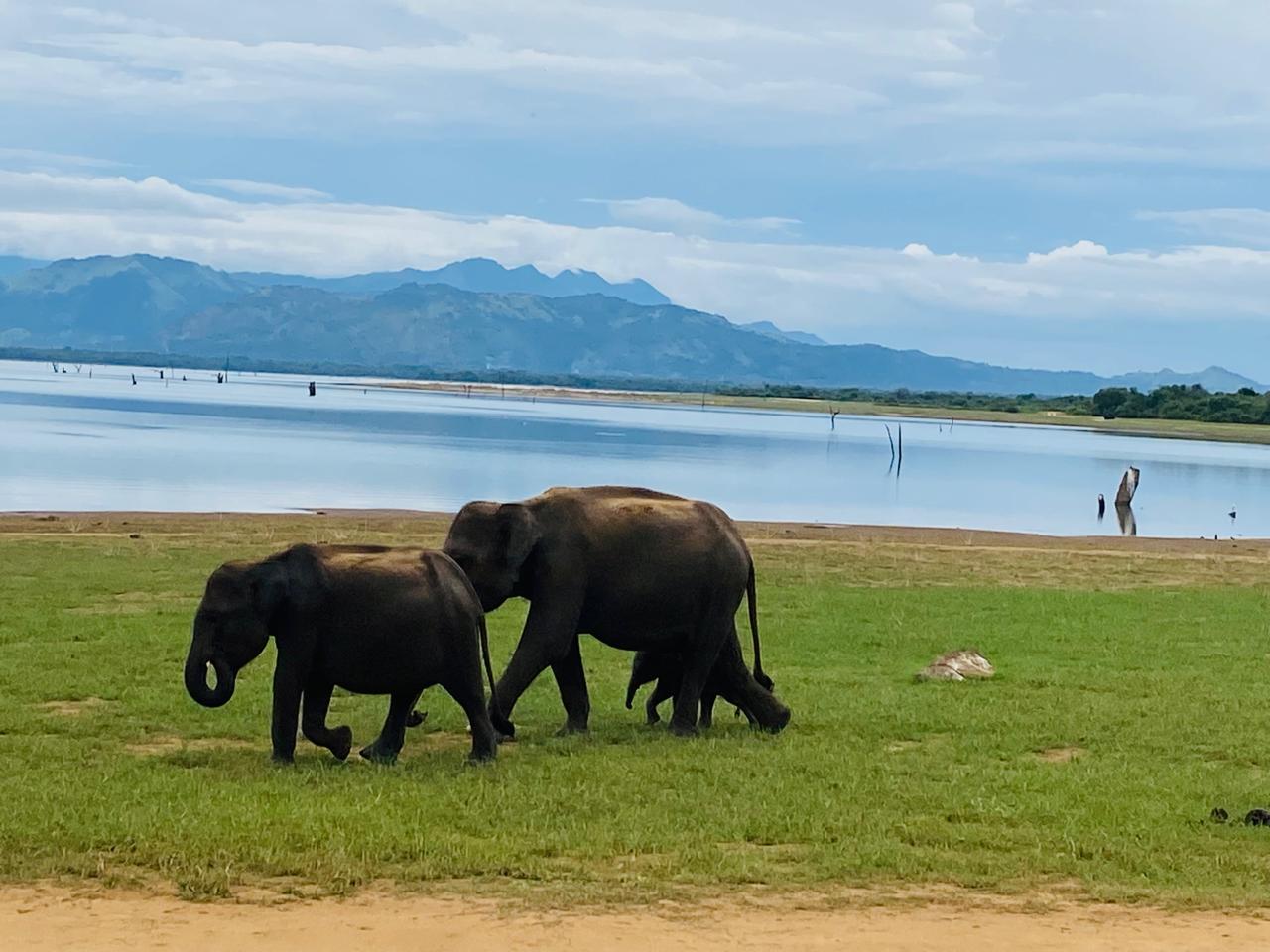
If you come to Sri Lanka wanting to see elephants — not a single elephant from a distance, but herds, up close, behaving like elephants actually behave — Udawalawe is where you go.
The park covers around 30,000 hectares of open grassland, scrub jungle, and the Udawalawe Reservoir. It has more than 200 resident elephants and a landscape open enough to spot them without a long search. Other parks have more variety — Yala gets talked about for leopards — but for elephants, Udawalawe is the best.
Why Udawalawe over other parks
The open terrain is the main reason. The Udawalawe Dam was completed in 1965, flooding the Walawe River valley for an irrigation scheme. The national park was created in 1972 to protect the wildlife displaced by that flooding — and the reservoir it left behind is what shapes the landscape today. Open water draws elephants. Open grassland means you can see them.
At Yala and Wilpattu, the forest is dense in places and sightings can be hit-and-miss. Udawalawe’s grassland and reservoir edges mean elephants are visible and, when a herd is at the water, you can observe them for long stretches doing what they actually do — drinking, bathing, young calves finding their feet — rather than catching a glimpse and losing them in the trees.
The Sri Lankan elephant is a subspecies of the Asian elephant (Elephas maximus maximus) and is listed as Endangered on the IUCN Red List. The country’s wild population sits around 6,000 — about ten percent of the world’s wild Asian elephants — and the Department of Wildlife Conservation, which runs Udawalawe, estimates a herd of roughly 250 is permanently resident inside the park.
The park is also less crowded than Yala, which gets overrun with jeeps during peak season. That matters more than most people realise when you’re watching wildlife.
What else is in the park
Elephants get the attention, but Udawalawe has a full cast. Water buffalo in large herds. Crocodiles along the reservoir. Jackals and spotted deer. The park records 184 bird species — 33 of them migratory. Endemic birds include the Sri Lanka junglefowl (the national bird), Sri Lanka spurfowl, red-faced malkoha, and Sri Lanka grey hornbill. Raptors include the white-bellied sea eagle, crested serpent eagle, grey-headed fish eagle, and the Sri Lankan crested hawk-eagle, which is endemic to the island. Leopard sightings happen but they’re rare and shouldn’t be the reason you come here.
The Elephant Transit Home
Just outside the park entrance is the Elephant Transit Home, a government-run rehabilitation facility for orphaned elephant calves. It was set up by the Department of Wildlife Conservation in 1995 and has been raising and releasing rescued calves back into the wild ever since. Young elephants rescued from across Sri Lanka are brought here, raised, and eventually released back into the wild. You can watch the feeding sessions at set times through the day — the calves come in from the surrounding jungle, get bottle-fed, and wander back out. It’s not a zoo or an elephant camp; the calves aren’t trained or ridden. It’s worth an hour of anyone’s time.
How a game drive works
Entry into the park requires a licensed jeep with a driver and tracker — private vehicles aren’t permitted on the game tracks. I arrange the jeep, go in with you, and know the routes and the reliable spots. Early morning (6am–10am) and late afternoon (3pm–6pm) are when the elephants are most active — midday they rest in shade and sightings drop off.
Getting here
Udawalawe is about 165km from Colombo, roughly 4 hours by road. From the south coast (Galle, Hikkaduwa) it’s a similar distance inland — a reasonable day trip or a natural stop on a route between the coast and the hill country.
FAQ
Is Udawalawe better than Yala? For elephants, yes — it’s not close. Yala has more leopard sightings (although leopards are still rarely guaranteed). If elephants are the priority, Udawalawe. If you want the broadest variety and are willing to accept more jeep traffic, Yala.
Will we definitely see elephants? Not “definitely” — wildlife doesn’t work that way. But Udawalawe has one of the highest elephant-sighting rates of any park in Asia. In good conditions, on a properly run game drive, the hit rate is very high.
Can children do a safari at Udawalawe? Yes, and they often enjoy it more than adults. The elephant sightings tend to be close and extended rather than fleeting, which holds attention. I’d suggest the morning drive — it’s cooler and the activity is better.
How long is a game drive? A standard morning or evening drive is 3–4 hours inside the park. I usually combine the game drive with a visit to the Elephant Transit Home for a full Udawalawe day.