
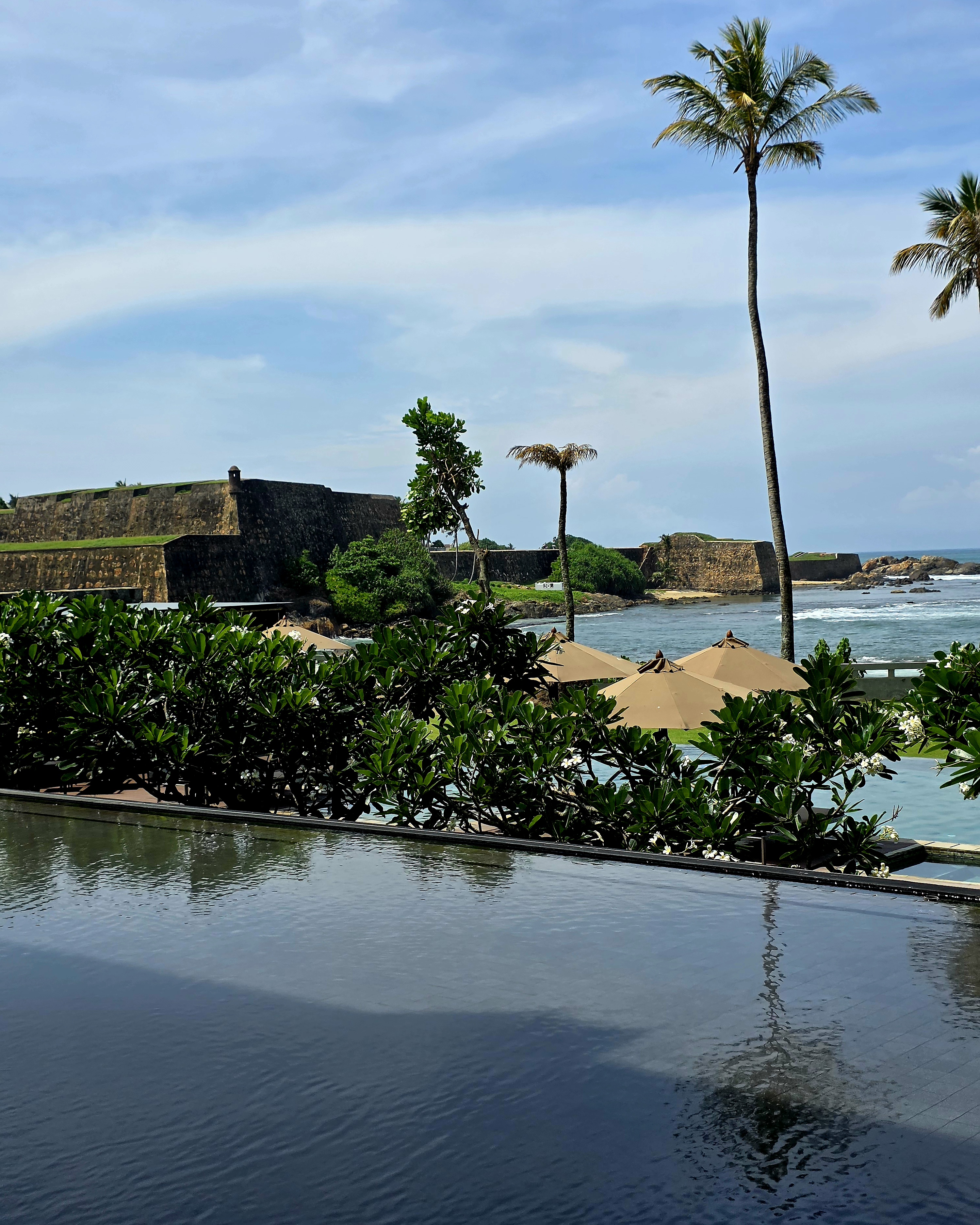
I live in Galle. It’s my home now, and I’d rather show someone around Galle than almost anywhere else — not because it’s the most dramatic place in Sri Lanka, but because there are very few places where history, everyday local life, and the ocean all sit this close together.
Galle is on the south coast, about 120km from Colombo. The old Dutch Fort is the reason most visitors come, and it earns its UNESCO listing — inscribed in 1988 as the “Old Town of Galle and its Fortifications,” it’s the largest remaining fortress built by Europeans anywhere in South or Southeast Asia. But the Fort is only one part of what Galle is.
The Fort — what it actually is
The Dutch built Galle Fort from 1649, replacing Portuguese earth ramparts with granite and coral. Thirteen bastions — named Sun, Moon, Star, Neptune, Aurora — still stand intact. The British took the fort peacefully in 1796 and kept everything as it was.
Inside is a working neighbourhood that hasn’t changed in structure for four centuries. The Dutch Reformed Church — Groote Kerk, built in 1755 — has gravestones as floor tiles: the headstones of Dutch colonial families laid flat so the congregation walks over them. The lighthouse at the southeastern tip was built in 1848, destroyed by fire in 1936, and rebuilt in 1939. It’s the oldest lighthouse in Sri Lanka and still operating.
At Flag Rock Bastion on the southwestern tip, local boys dive off the ramparts into the sea in the afternoon. It’s not organised and it’s not a show. It just happens.
The cricket ground sits just outside the Fort walls. I think it’s the most beautifully positioned playing field in the world — though I live here, so I’m biased.
Beyond the Fort walls
The Galle that exists outside the Fort is a working Sri Lankan city, and it’s where I spend most of my time.
The Dutch Market on Main Street has been running for over 300 years. The families selling produce and spices there are descendants of people who sold in the same spot before the British arrived.
The National Maritime Museum is in a 1671 Dutch warehouse directly above the Old Gate — one of the original buildings of the fort. The collection holds artifacts from two Dutch East India Company ships that sank in Galle harbour: the Avondster in 1659 and the Hercules in 1661. Beer mugs, smoking pipes, sailor shoes, artillery — the personal effects of men who never made it home from a trading voyage. The 2004 tsunami destroyed about 80% of the collection. What survived reopened in 2010.
Galle is also the natural starting point for the entire south coast. Hikkaduwa is 20km north. Ahangama is 15km east. Hiriketiya is about 40km east. If you’re spending time on the south coast, Galle makes sense as a base.
What I show people here
The Fort walk — including Flag Rock Bastion and the parts of the ramparts most visitors skip. The Groote Kerk, if it’s open, for the floor. The lighthouse at sunset. The cricket ground. The Maritime Museum, which takes an hour and most people walk past without knowing it’s there. And a meal at a local place rather than one of the restaurants inside the Fort that exists purely for tourist turnover.
The Fort has also become home to some of the best independent makers in Sri Lanka. Stick No Bills for handwoven textiles, vintage Ceylon prints, and locally made jewellery. Orchid House for handmade goods — most of them designed by the owner, Yameen Hussain. Barefoot for textiles made by Sri Lankan craftswomen working from home. These are not souvenir shops. If shopping is part of your trip, I’ll take you to the right ones.
When to come
October to April. Same as the rest of the south coast — the weather is settled, the sea is calm, and the light in the late afternoon on the Fort walls is genuinely good. May to September can be overcast and rainy, though the Fort itself is worth seeing year-round.
FAQ
How long do you need in Galle? Half a day is enough to walk the Fort and see the main points. A full day lets you move at a slower pace, take in the Maritime Museum, and explore the streets properly. I can shape a route around however much time you have.
Is the Galle Fort suitable for families? Yes — the streets are calm, the walls are easy to walk, and children tend to enjoy the scale of the fort and the ocean views from the ramparts. The cricket ground is usually a hit too.
What’s the best way to see the Fort? On foot. The streets inside the walls are narrow and it’s a small enough area that you don’t need transport. Walking the full perimeter of the ramparts first gives you the lay of the land before you head into the streets.
Can I combine Galle with other south coast places in one day? Yes — Hikkaduwa is 20km north, Ahangama and Hiriketiya are east along the coast. South coast day routes that start and end in Galle are some of my most common trips.